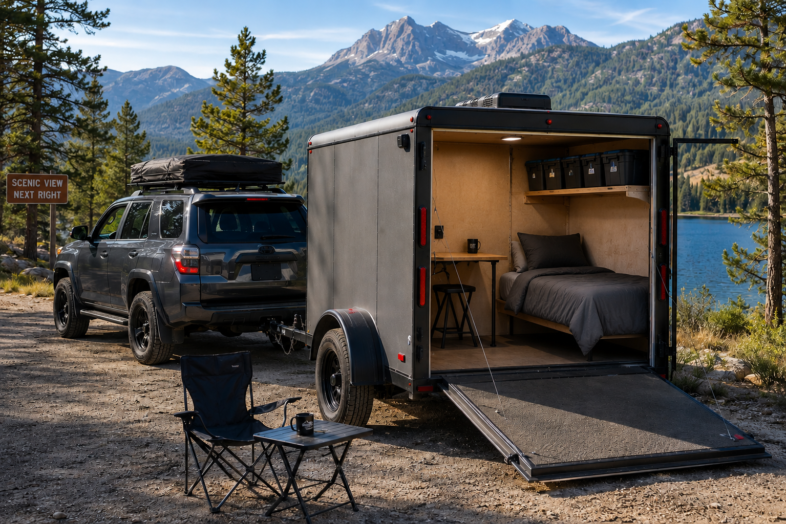
SUV and cargo trailer camping has become one of the most affordable and flexible ways to explore the country. Whether you’re planning weekend camping trips, extended road adventures, or eventually transitioning into mobile living, having the right SUV & Cargo Trailer Camping Setup makes a huge difference.
The good news is that you do not need thousands of dollars’ worth of gear to enjoy the freedom of the open road.
Many beginners make the mistake of buying every gadget they see online. Before long, their SUV is overloaded, their trailer is packed with things they rarely use, and they’ve spent far more money than necessary.
A better approach is to focus on practical essentials that improve safety, comfort, and convenience.
In this guide, we’ll look at what you really need for a successful SUV camping setup and cargo trailer travel experience.
Start With Reliable Transportation
Before buying camping gear, focus on the most important piece of equipment you own: your vehicle.
Your SUV and trailer combination should be dependable before you hit the road.
Basic maintenance should include:
- Fresh oil and filters
- Proper tire pressure
- Good tread on all tires
- Working lights
- Healthy battery
- Functional brakes
- Updated registration and insurance
Many roadside problems happen because people spend money on accessories while ignoring maintenance.
A reliable vehicle is more important than any camping gadget.
The Essential Trailer Setup
One of the biggest advantages of cargo trailer travel is flexibility.
A cargo trailer can carry equipment, provide sleeping space, offer weather protection, and serve as a secure storage area.
For most travelers, a simple trailer setup works best.
Focus on these basics:
Insulation
Insulation improves comfort in both hot and cold weather.
Even basic foam board insulation in the roof can significantly reduce temperature swings inside the trailer.
Ventilation
Good airflow prevents condensation and improves sleeping comfort.
Popular options include:
- Roof vents
- Powered roof fans
- Side windows with screens
Comfortable Sleeping Area
You don’t need a luxury bed.
Many travelers use:
- Memory foam mattresses
- Folding cots
- Sleeping platforms
- Camping mattresses
The goal is to get quality sleep.
Everything else becomes easier when you’re well-rested.
Simple Storage
Organized storage prevents frustration.
Consider:
- Plastic bins
- Shelving systems
- Hanging organizers
- Under-bed storage
Keep frequently used items easy to access.
Essential Safety Equipment
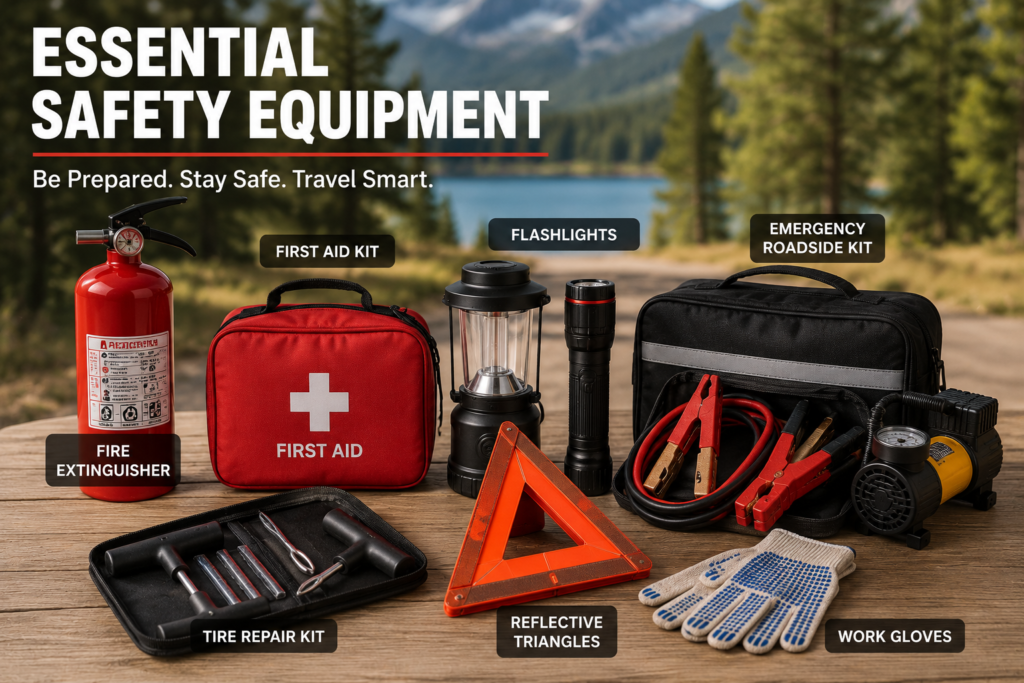
Safety gear is often overlooked until it’s needed.
Fortunately, most safety items are inexpensive.
Every SUV & Cargo Trailer Camping Setup should carry:
Fire Extinguisher
A small fire extinguisher can prevent a minor issue from becoming a disaster.
Keep one inside the SUV and another inside the trailer.
First Aid Kit
Your kit should include:
- Bandages
- Antiseptic wipes
- Medical tape
- Pain relievers
- Prescription medications
- Emergency contact information
Flashlights
Carry multiple flashlights.
Headlamps are especially useful because they leave both hands free.
Emergency Roadside Kit
Include:
- Jumper cables
- Tire inflator
- Tire repair kit
- Reflective triangles
- Basic tools
- Work gloves
You may never need these items, but you’ll be glad they’re available if you do.
Power Solutions That Actually Matter
One area where beginners often overspend is on electrical equipment.
You don’t need an elaborate solar system to start traveling.
Begin with your actual needs.
For many travelers, power is needed for:
- Phone charging
- Laptop charging
- Lighting
- Small fan
- CPAP machine
- Portable refrigerator
Portable Power Stations
Modern power stations offer an easy solution.
Advantages include:
- No complicated installation
- Portable design
- Rechargeable from multiple sources
- Expandable with solar panels
Solar Panels
Solar becomes more valuable during longer trips.
Even modest solar systems can help maintain batteries while boondocking.
The key is matching your solar capacity to your actual energy usage.
LED Lighting
LED lights use very little power and provide excellent illumination.
Switching to LED lighting is one of the simplest upgrades you can make.
Kitchen Gear You Actually Need
Many people pack a complete kitchen.
Most discover they use only a fraction of it.
For minimalist travel gear, simplicity wins.
Consider carrying:
- Small propane stove
- Single frying pan
- Small pot
- Sharp knife
- Cutting board
- Reusable plate
- Bowl
- Cup
- Basic utensils
That’s enough to prepare most meals on the road.
Water Storage
Water is more important than fancy cooking equipment.
Carry:
- Drinking water containers
- Backup water supply
- Water filtration option
Clean drinking water should always be a priority.
Food Storage Options
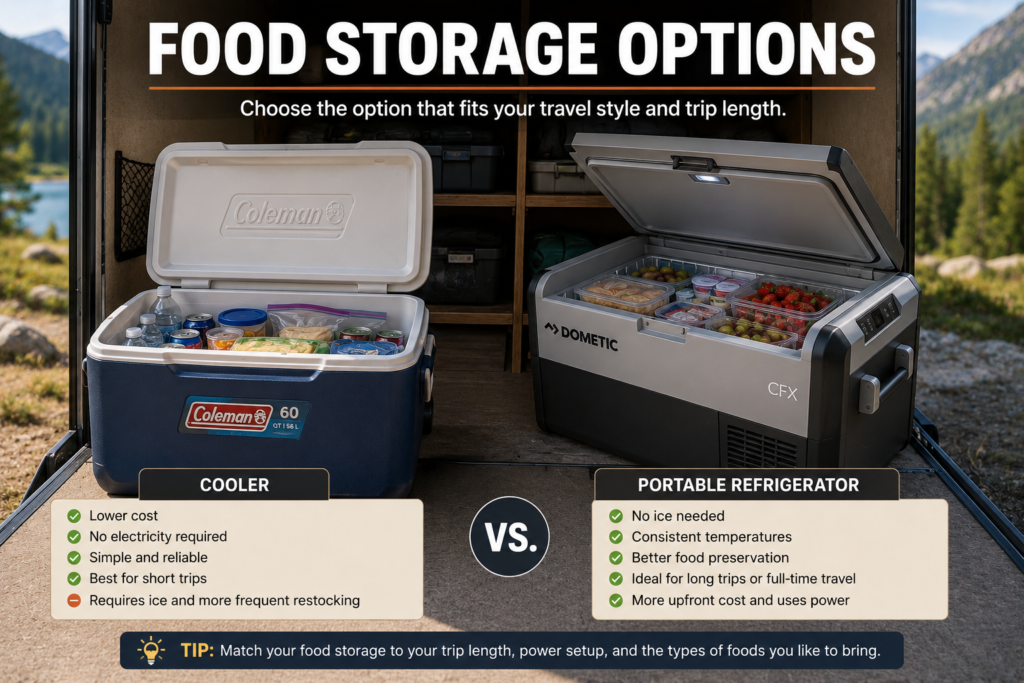
Food storage depends on your travel style.
Cooler
Coolers work well for short trips.
Benefits include:
- Low cost
- No electricity required
- Simple operation
Portable Refrigerator
For longer trips, portable refrigerators offer significant advantages.
Benefits include:
- No ice purchases
- Consistent temperatures
- Better food preservation
- Less mess
Many long-term travelers eventually upgrade to a refrigerator because of convenience.
Clothing: Less Is More
One of the biggest lessons experienced travelers learn is that they need far fewer clothes than expected.
A practical wardrobe may include:
- 5–7 shirts
- 2–3 pairs of pants
- Shorts
- Jacket
- Rain gear
- Underwear
- Socks
- Comfortable walking shoes
Choose clothing that layers well and dries quickly.
Laundry facilities are available almost everywhere.
There’s no need to pack months’ worth of clothing.
Navigation and Communication
Technology makes road travel easier than ever.
Essential tools include:
Smartphone
Your smartphone can provide:
- GPS navigation
- Weather forecasts
- Campground information
- Emergency communication
- Entertainment
Vehicle Charger
Always carry backup charging options.
Paper Maps
Technology occasionally fails.
A paper atlas remains a useful backup.
Internet Access
For many travelers, staying connected matters.
Options include:
- Smartphone hotspots
- Mobile hotspot devices
- Campground Wi-Fi
- Public Wi-Fi
- StarLink Mini
Choose the option that fits your travel style.
Comfort Items Worth Bringing
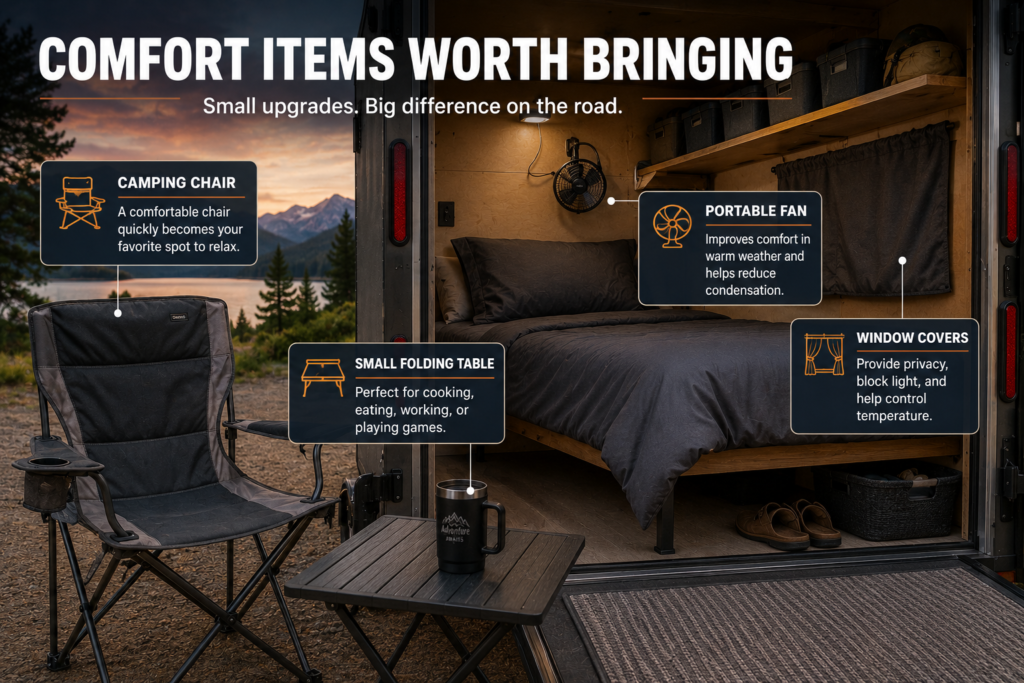
While minimalism is important, comfort matters too in your SUV & Cargo Trailer Camping Setup.
A few carefully chosen items can greatly improve your experience.
Popular choices include:
Camping Chair
A comfortable chair quickly becomes one of your favorite possessions on the road.
Small Folding Table
Useful for cooking, working, and eating.
Portable Fan
Improves comfort during warm weather and helps reduce condensation.
Window Covers
Provide:
- Privacy
- Temperature control
- Better sleep
Simple solutions often work surprisingly well.
What You Probably Don’t Need
Many beginners spend money on items that rarely get used.
Examples include:
- Large outdoor kitchens
- Multiple cooking appliances
- Excessive tools
- Large entertainment systems
- Decorative camping accessories
- Duplicate equipment
Before purchasing anything, ask yourself:
“Will this genuinely improve my travel experience?”
If the answer is no, skip it.
The Best Road Travel Gear Is Often the Simplest
The most successful travelers usually aren’t carrying the most equipment.
They’re carrying the right equipment.
Simple gear tends to be:
- Easier to maintain
- Easier to replace
- Less expensive
- More reliable
- Easier to organize
Complexity often creates problems rather than solves them.
Focus on practical solutions instead.
Build Your Setup Slowly
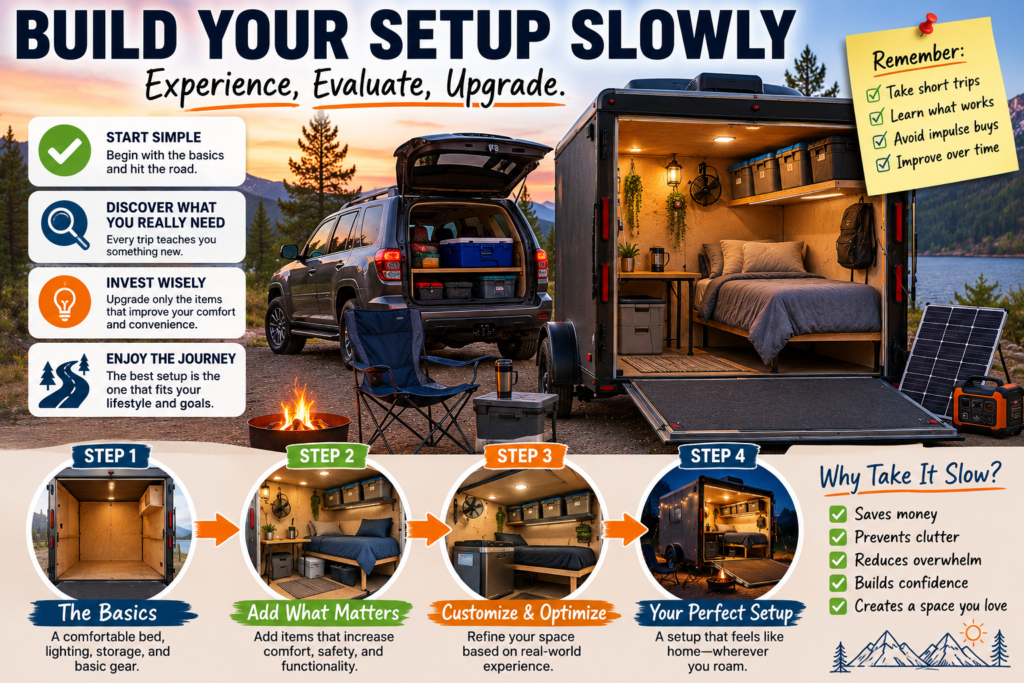
One of the smartest approaches to SUV travel is starting small.
Take a few weekend trips before investing heavily.
You’ll quickly discover:
- What you use regularly
- What you never use
- What upgrades actually matter
Your real-world experience will guide future purchases far better than any online gear list.
This approach saves money and prevents expensive mistakes.
Final Thoughts
A successful SUV camping setup doesn’t require luxury equipment, expensive gadgets, or a trailer packed with gear.
What you really need is a reliable vehicle, a comfortable place to sleep, basic safety equipment, practical power solutions, and a handful of well-chosen travel essentials.
Whether you’re planning occasional camping trips or preparing for long-term cargo trailer travel, simplicity usually leads to a better experience.
Start with the basics, travel often, and let your experience shape future upgrades.
The freedom of the road comes from having enough—not from having everything.