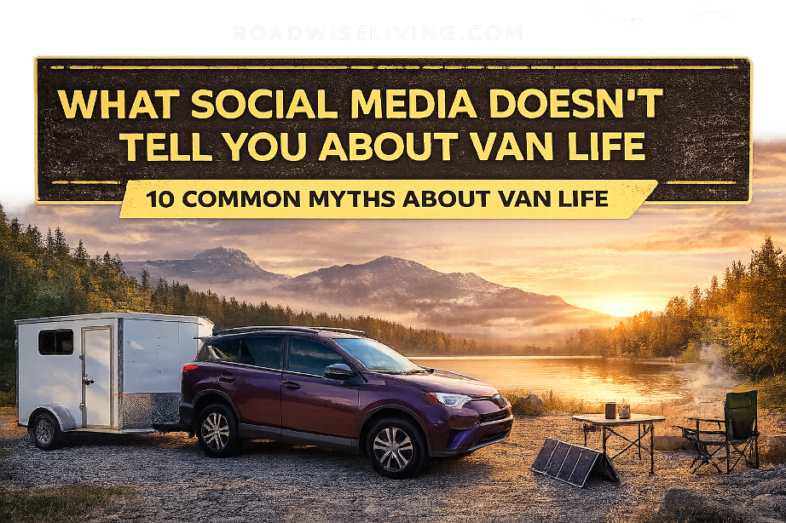
If you’ve spent any time on YouTube, Instagram, Pinterest, or TikTok, you’ve probably seen countless videos showcasing realistic van life, or at least what appears to be realistic. Beautiful custom vans are parked beside crystal clear lakes, coffee is brewing as the sun rises over the mountains, and smiling travelers seem to have escaped the stress of everyday life forever.
It’s an inspiring picture.
It’s also an incomplete one.
There’s nothing wrong with dreaming about life on the road. In fact, many people are discovering that simple road living offers more freedom, flexibility, and peace of mind than the traditional “work, spend, repeat” lifestyle.
The problem is that social media often highlights only the best moments. It rarely shows the ordinary days, unexpected expenses, maintenance issues, or compromises that come with any form of affordable mobile living.
If you’re considering life on the road, my goal isn’t to discourage you. It’s exactly the opposite.
I want to help you start with realistic expectations so you can build a lifestyle that’s enjoyable, financially sustainable, and uniquely your own.
Because the road living truth is actually better than the fantasy…if you approach it the right way.
Why Social Media Doesn’t Show the Whole Story
Social media rewards beautiful images, exciting destinations, dramatic drone footage, and stunning sunsets.
It doesn’t reward:
- Someone spending two hours at a laundromat.
- Or replacing a flat tire.
- Or waiting in line to refill propane.
- Or driving through three days of rain.
Those moments aren’t exciting, so they rarely make it into a video or Instagram post.
Most content creators aren’t trying to deceive anyone. They’re simply sharing the highlights of their lives, the same way families share vacation photos instead of pictures of traffic jams and missed flights.
The danger comes when viewers mistake those highlights for everyday reality.
Many newcomers assume that realistic van life means every day feels like a vacation.
The truth is much simpler.
You’re still living your life.
Your address just changes more often.
The Reality of Road Living
Whether you travel in a van, a cargo trailer, an SUV, or a small RV, daily life still includes everyday responsibilities.
You’ll still need to:
- Buy groceries.
- Wash clothes.
- Budget your money.
- Maintain your vehicle.
- Cook meals.
- Find drinking water.
- Charge your batteries.
- Empty your trash.
- Stay connected.
- Plan where you’ll sleep.
None of these tasks is glamorous.
They’re simply part of life.
Ironically, many people discover that these routines become easier on the road because they own less, have fewer obligations, and spend more time focusing on experiences instead of possessions.
That’s one of the biggest lessons I’ve learned while preparing for my own Road Wise Living journey.
Living simply doesn’t eliminate responsibility.
It removes much of the unnecessary complexity.
Freedom Isn’t Measured by the Price of Your Vehicle
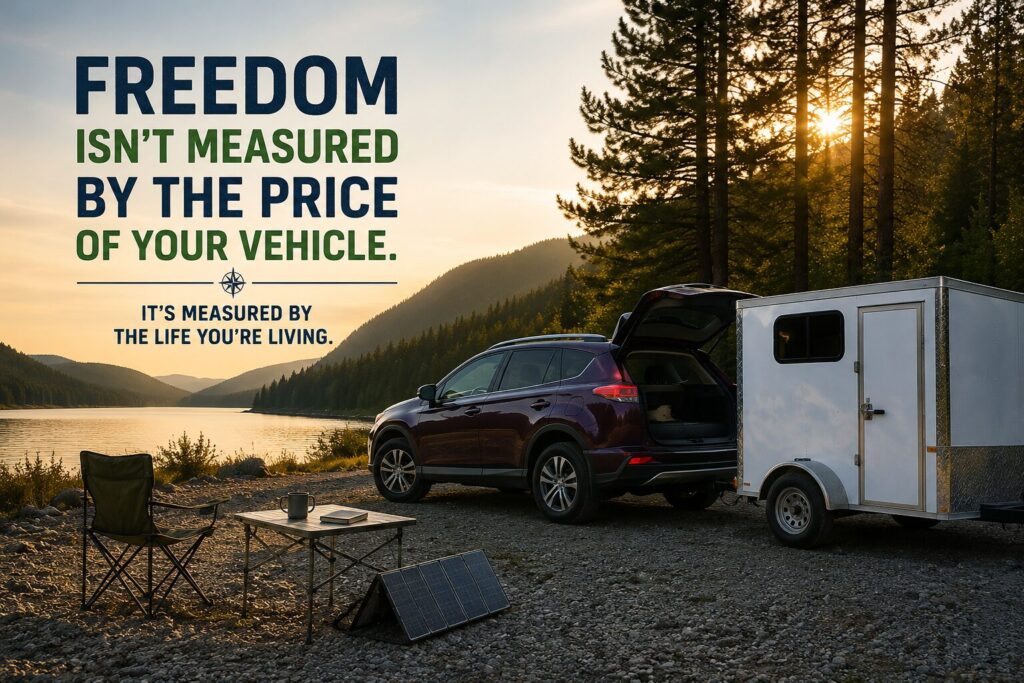
One of the biggest myths surrounding realistic van life is that freedom requires an expensive vehicle.
Scroll through social media, and you’ll see professionally built Sprinter vans selling for well over $150,000.
Some are closer to the price of a house than a vehicle.
If someone can comfortably afford that and it fits their lifestyle, there’s absolutely nothing wrong with it.
But it’s important to understand that expensive doesn’t automatically mean better.
Real freedom comes from having choices.
A lower monthly payment often provides more freedom than heated floors, custom cabinetry, or luxury finishes ever could.
Ask yourself which traveler has more flexibility:
- Someone making large monthly payments on a luxury camper van.
Or…
- Someone traveling debt-free in an older SUV and a simple cargo trailer.
There’s no universal answer.
But for many people, financial freedom creates far more peace of mind than luxury equipment.
Why I’m Choosing a Different Path
As I planned my own transition into mobile living, I looked at nearly every option available.
- Motorhomes.
- Travel trailers.
- Fifth wheels.
- Truck campers.
- Custom vans.
- Factory-built camper vans.
Eventually, I realized something important.
I wasn’t searching for the most impressive setup.
I was searching for the lifestyle that made the most sense.
For me, that meant choosing the vehicle I already owned. A midsize SUV, and converting a simple 5×8 cargo trailer into a comfortable camper.
Will it be featured on magazine covers?
Probably not.
Will strangers stop to admire it at every campground?
Probably not.
But it will allow me to travel comfortably, keep my expenses under control, and explore the country without carrying unnecessary debt.
That’s a trade-off I’m happy to make.
Your answer may be completely different.
The important thing is choosing the lifestyle that supports your goals, not someone else’s.
Bigger Isn’t Always Better
One mistake many beginners make is assuming they need the largest vehicle they can afford.
In reality, bigger often means more expensive.
Larger vehicles typically cost more to purchase, insure, maintain, fuel, and repair.
They’re also harder to park, less maneuverable, and sometimes restricted from roads where smaller vehicles are welcome.
A modest vehicle has several advantages.
- It encourages simplicity.
- It fits into more campsites.
- It costs less to operate.
And it often allows you to travel longer because your monthly expenses stay lower.
The goal isn’t to own the biggest camper.
The goal is to stay on the road.
Slow Travel Beats Constant Travel
One of the biggest surprises for many first-time travelers is discovering how expensive constant movement can become.
Driving every day sounds exciting.
Until you start paying for it.
Fuel costs rise quickly.
Oil changes happen more often.
Tires wear out sooner.
Mechanical repairs become more frequent.
Travel fatigue also sets in.
Many experienced travelers intentionally stay in one location for several days, or even several weeks.
They explore nearby towns.
Take hikes.
Visit local museums.
Read books.
Catch up on work.
Relax.
Then they move on.
This slower pace not only saves money but also allows you to experience places instead of simply driving through them.
If your goal is budget road travel, slowing down may be the single best financial decision you can make.
The Best Campsites Rarely Cost the Most
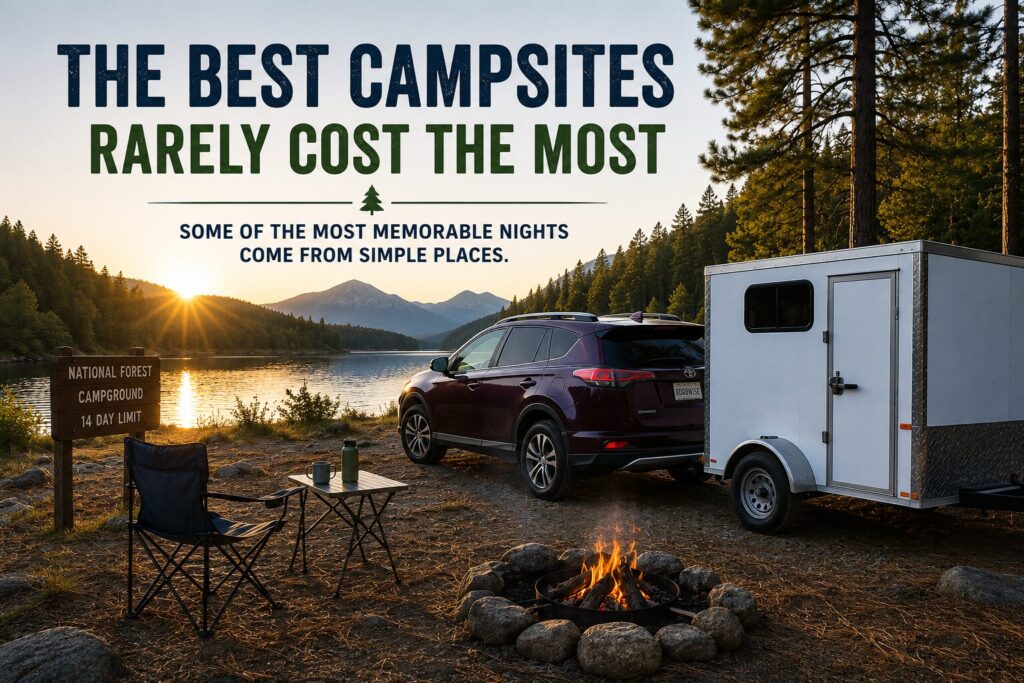
Another myth promoted online is that memorable experiences require expensive campgrounds.
Sometimes they do.
Many private RV resorts offer outstanding amenities.
But some of the most enjoyable nights I’ve experienced while traveling were surprisingly simple.
- A quiet county park.
- A peaceful national forest campground.
- A scenic overlook.
- A lakeside public campground.
- A small-town city park.
The value wasn’t found in luxury amenities.
It came from slowing down long enough to appreciate where I was.
Simple surroundings often create the best memories.
You Probably Need Less Than You Think
If you watch enough van tours online, it’s easy to believe you need dozens of expensive accessories before you can begin.
- Massive solar systems.
- Large lithium battery banks.
- Outdoor showers.
- Roof decks.
- Built-in espresso machines.
- Custom cabinetry.
- Designer lighting.
- Starlink.
- Indoor bathrooms.
- Air conditioning.
Can those things improve comfort?
Absolutely.
Are they necessary?
Usually not.
One of the greatest advantages of starting small is discovering what you actually use before investing thousands of dollars in equipment you may never need.
The road has a wonderful way of teaching you what’s truly important.
Often, it isn’t the things you thought you’d miss.
The Hidden Costs of Modern Van Life
One thing social media rarely discusses is how quickly small expenses add up.
Many people spend months researching the perfect van while giving very little thought to the ongoing costs of living on the road.
Those expenses don’t disappear simply because your home has wheels.
Common monthly costs include:
- Fuel
- Vehicle insurance
- Maintenance and repairs
- Registration
- Cell phone service
- Internet access
- Food
- Laundry
- Propane or Butane
- Campground fees
- Emergency savings
None of these expenses are unique to realistic van life. They’re simply part of responsible financial planning.
The difference between someone who enjoys years of road travel and someone who gives up after a few months often has less to do with their vehicle and more to do with their budget.
One of the best decisions you can make before leaving home is to create a realistic monthly spending plan.
Knowing where your money is going removes much of the uncertainty that causes stress on the road.
Weather Doesn’t Care About Your Plans
Beautiful weather makes for beautiful photographs.
Unfortunately, Mother Nature doesn’t check your travel itinerary.
Sooner or later, you’ll experience:
- Heavy rain
- High winds
- Cold nights
- Hot afternoons
- Humidity
- Snow
- Dust
- Mosquitoes
- Mud
Every traveler deals with the weather.
The key isn’t avoiding it.
The key is learning to adapt.
Sometimes that means staying put for an extra day, changing your route, or simply means enjoying a good book while listening to rain fall on the roof of your camper.
The road teaches patience in ways few other lifestyles can.
Mechanical Problems Will Happen
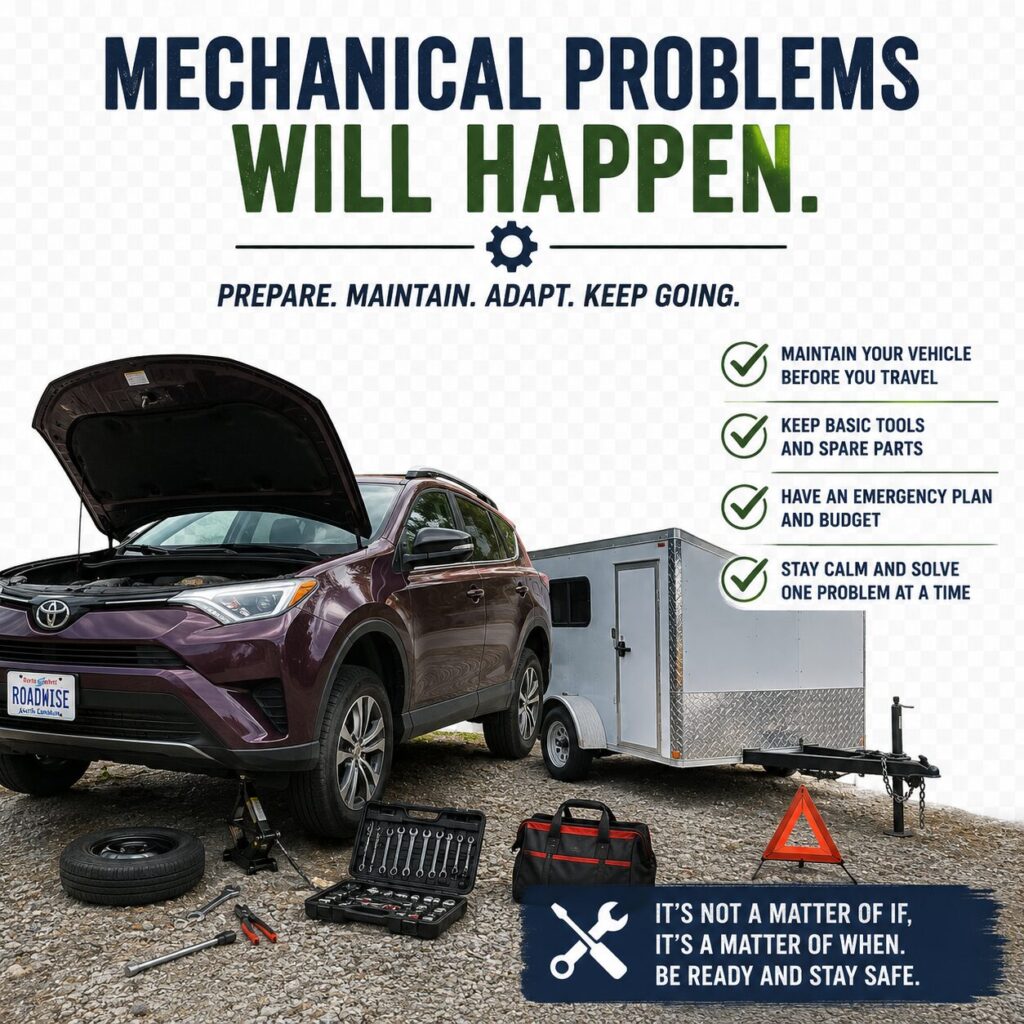
Every vehicle eventually needs repairs.
That includes:
- Luxury camper vans
- Class A motorhomes
- Pickup trucks
- SUVs
- Cargo trailers
Maintenance isn’t a sign that something went wrong.
It’s simply part of owning a vehicle.
One advantage of choosing a simpler setup is that repairs are often simpler too.
For example, one reason I chose an SUV towing a cargo trailer is flexibility.
If my SUV needs repairs, my home doesn’t have to go into the repair shop with it.
Likewise, if my trailer needs work, I still have transportation.
Separating the living space from the tow vehicle isn’t the right choice for everyone, but it offers advantages that are often overlooked when people compare different forms of affordable mobile living.
Why Cargo Trailer Living Deserves More Attention
Cargo trailers don’t receive nearly as much attention as custom camper vans.
That’s understandable.
- They aren’t glamorous.
- They aren’t trendy.
- They rarely appear in professionally produced YouTube videos.
Yet they offer several practical advantages.
A cargo trailer can be customized to fit your specific needs instead of someone else’s design.
You can build only what you need and skip expensive features that don’t improve your daily life.
If your tow vehicle eventually wears out, you don’t lose your home.
Simply replace the vehicle and keep traveling.
That’s one of the reasons I chose this path.
I’m not trying to impress anyone.
I’m trying to build a lifestyle that’s affordable, reliable, and sustainable for years to come.
If you’re interested in learning more about this approach, be sure to read my Beginner’s Guide to Cargo Trailer Living and Budget Cargo Trailer Camper Conversion: My Initial Build & Purchase Breakdown.
The Greatest Luxury Is Peace of Mind
When people think about luxury, they often picture expensive interiors and premium features.
I’ve started thinking about luxury differently.
- Luxury is waking up without financial stress.
- Luxury is having enough savings to handle unexpected repairs.
- Luxury is traveling because you want to, not because you’re rushing to your next reservation.
- Luxury is knowing your monthly expenses are manageable.
- Luxury is owning fewer things that demand your time and attention.
Those kinds of luxuries aren’t measured in dollars.
They’re measured in peace of mind.
Stop Comparing Your Journey to Someone Else’s
Comparison has probably discouraged more people from pursuing simple road living than any mechanical breakdown ever has.
Remember that many of the creators you see online earn income from:
- YouTube advertising
- Sponsorships
- Affiliate marketing
- Photography
- Merchandise
- Brand partnerships
Creating beautiful content is part of their business model.
There’s nothing wrong with that.
But it does mean you’re often seeing a carefully edited version of everyday life.
Your journey doesn’t need to look like theirs.
You don’t need a six-figure camper van, drone footage, or thousands of followers.
You simply need a lifestyle that brings you joy.
Define Success Before You Leave Home
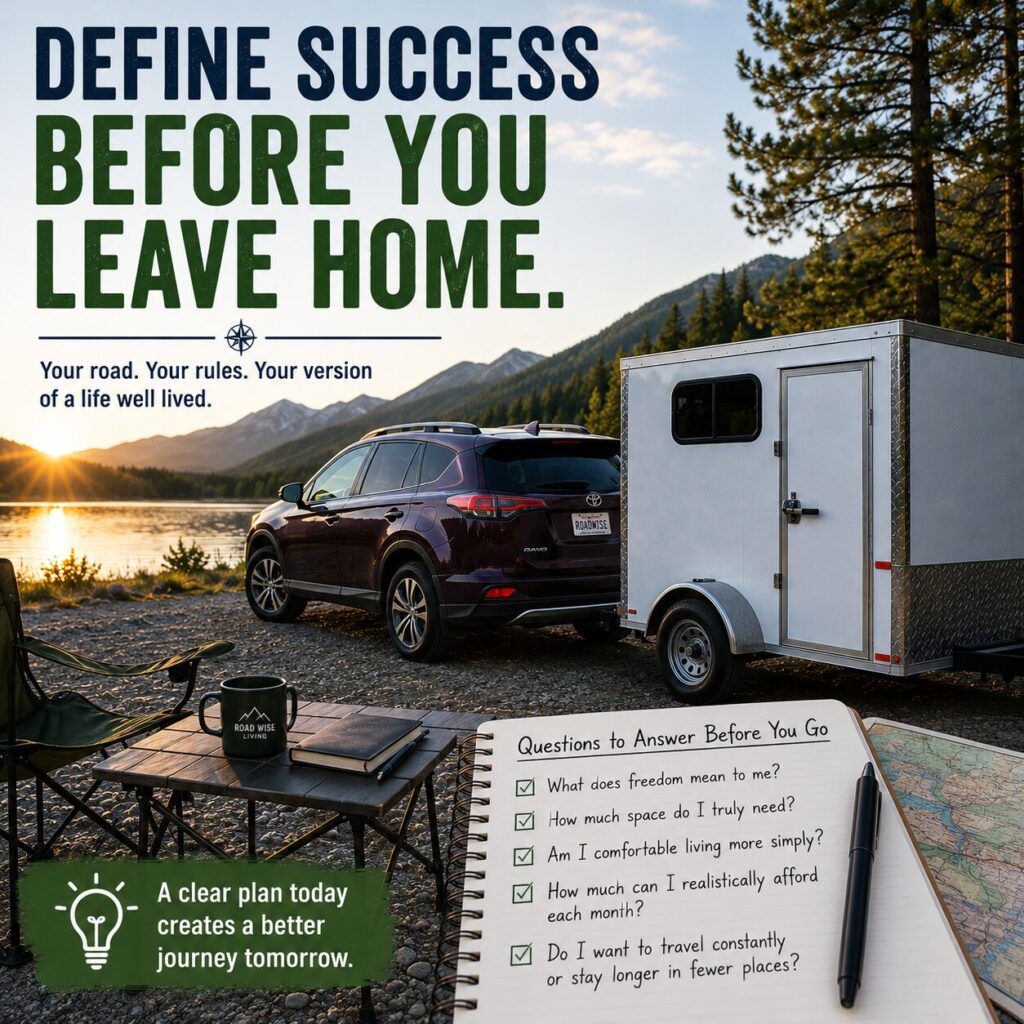
Everyone has a different reason for traveling.
Some people want adventure, others want retirement freedom, and some hope to reduce living expenses. Others simply want to slow down.
Spend time identifying your own reasons before buying a vehicle or starting a conversion.
Ask yourself:
- What does freedom mean to me?
- How much space do I truly need?
- Am I comfortable living more simply?
- How much can I realistically afford each month?
- Do I want to travel constantly or stay longer in fewer places?
Answering these questions honestly will help you build a lifestyle that’s based on your priorities instead of someone else’s expectations.
The Road Wise Living Philosophy
When I started planning this journey, I realized I wasn’t chasing the popular version of van life.
I wasn’t looking for expensive finishes or luxury upgrades.
I was looking for freedom.
- Freedom from unnecessary debt.
- Freedom from owning too much.
- Freedom to travel at my own pace.
- Freedom to spend more time enjoying life instead of paying for it.
That’s the foundation of Road Wise Living.
This website isn’t about building the fanciest camper.
It isn’t about buying the newest gadgets.
And it certainly isn’t about convincing you that there’s only one right way to travel.
It’s about helping ordinary people create an affordable, practical, and enjoyable lifestyle on the road.
Whether you choose a camper van, an SUV, a cargo trailer, or a small RV, the goal remains the same.
- Live simply.
- Travel wisely.
- Enjoy the journey.
Frequently Asked Questions
Is realistic van life cheaper than living in a house?
It can be, especially if you avoid debt, travel slowly, and keep your monthly expenses under control. However, fuel, maintenance, insurance, food, and repairs still need to be included in your budget.
Is a cargo trailer better than a camper van?
Neither is universally better. A cargo trailer offers flexibility and a lower purchase price, while a camper van combines transportation and living space into one vehicle. The right choice depends on your travel style, budget, and priorities.
How much money do you need for realistic van life?
Every traveler is different, but many people find that traveling slowly, cooking their own meals, and minimizing campground fees can make road living surprisingly affordable. The less debt you carry into the lifestyle, the more flexibility you’ll have.
Is road living safe?
Road living can be very safe when you plan ahead, stay aware of your surroundings, maintain your vehicle, and use common sense when choosing overnight locations. Remember, if you ever feel the least bit uneasy in a location, then immediately change to a different location for safety. ALWAYS TRUST YOUR GUT & YOUR INSTINCTS!
Do you need an expensive camper to enjoy road living?
No. Many people successfully travel in older vans, SUVs, pickup trucks, cargo trailers, and small RVs. A reliable, well-maintained vehicle is far more important than an expensive one.
Final Thoughts
If there’s one lesson I’ve learned while preparing for this journey, it’s that realistic van life isn’t really about vans at all.
It’s about creating a life that gives you more freedom, more experiences, and less unnecessary stress.
For some people, that will be a custom Sprinter van.
For others, it might be a truck camper, a small motorhome, or a converted cargo trailer.
There isn’t a single “correct” way to live on the road.
The best setup is the one you can comfortably afford, confidently maintain, and genuinely enjoy.
Don’t let social media convince you that you need luxury before you begin.
You don’t need the perfect vehicle, expensive equipment, or someone else’s dream.
You simply need a realistic plan, a willingness to adapt, and the courage to take the first step.
That’s the heart of Road Wise Living.
It’s not about chasing perfection.
It’s about discovering that freedom often begins the moment you decide you already have enough.