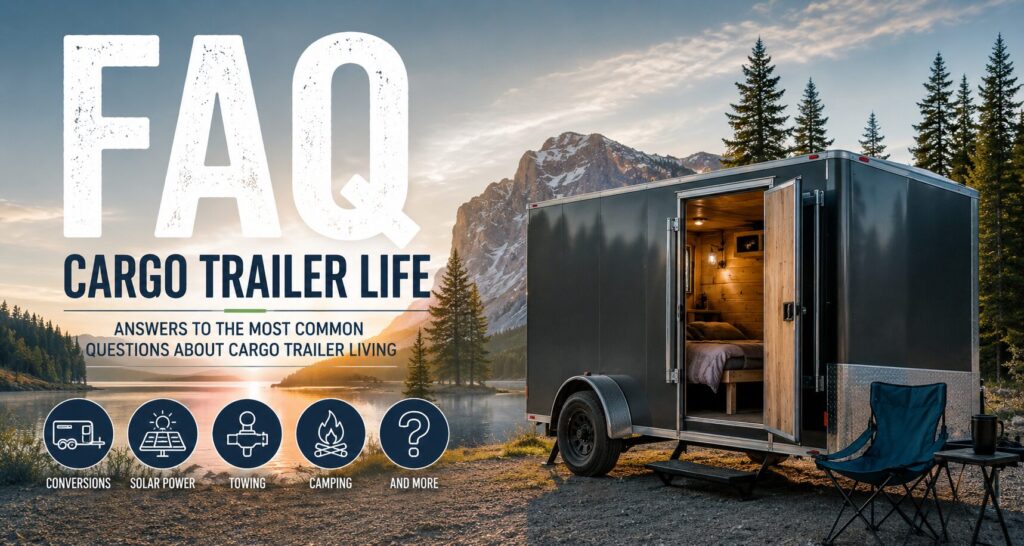
Thinking about converting a cargo trailer into a camper? You’re not alone.
Cargo trailer living has become one of the fastest-growing alternatives to expensive RVs and van builds. Whether you’re planning weekend adventures, long road trips, or full-time mobile living, it’s natural to have questions before getting started.
Below are the most common cargo trailer living FAQ’s and their answers.
Is it legal to live in a cargo trailer?
The answer depends on where you are.
There are no federal laws prohibiting someone from sleeping in or traveling with a converted cargo trailer. However, cities, counties, campgrounds, and public lands all have different rules regarding overnight parking and camping.
Always check local regulations before spending the night.
What size cargo trailer is best?
The best size depends on how you plan to travel.
Popular sizes include:
• 5×8 – Solo travelers who value simplicity
• 5×10 – More storage while remaining lightweight
• 6×10 – Comfortable for one person full-time
• 6×12 – Excellent balance of living space and towing
• 7×14 and larger – Couples or extended travel
A smaller trailer is easier to tow, less expensive, and fits into more campsites.
Can my SUV tow a cargo trailer?
Many SUVs can.
The important numbers are:
• Maximum tow rating
• Payload capacity
• Trailer weight
• Tongue weight
Never exceed the manufacturer’s towing limits.
Always weigh your completed trailer before taking long trips.
Do I need a special driver’s license?
In most U.S. states, no.
Most cargo trailers fall well below the weight requiring a commercial or special license.
Check your state’s DMV requirements if you’re unsure.
How much does a cargo trailer conversion cost?
One advantage of cargo trailer living is flexibility.
Approximate costs:
Basic weekend setup
$2,000–$5,000
Comfortable camper conversion
$5,000–$10,000
Fully equipped off-grid build
$10,000–$20,000+
Many people build gradually over time rather than spending everything at once.
Cargo Trailer Living FAQ’s (continued):
Is insulation necessary?
If you plan to travel during hot or cold weather, yes.
Insulation helps:
• Reduce heat
• Reduce cold
• Decrease condensation
• Improve comfort
Foam board insulation is a popular choice because it’s lightweight and easy to install.
Can I use solar power?
Absolutely.
Many cargo trailer campers use portable or roof-mounted solar panels to power:
• Lights
• Fans
• Refrigerators
• Phones
• Laptops
• CPAP machines
A portable solar power station is an excellent starting point for beginners.
Do I need shore power?
No.
Many travelers rely entirely on solar power and battery storage.
However, campground electrical hookups provide additional convenience.
Where do you shower?
Popular options include:
• Campgrounds
• Truck stops
• Fitness center memberships
• Portable privacy tents
• Solar showers
Many travelers combine several methods depending on where they’re staying.
How do you use the bathroom?
Common options include:
• 5-gallon (or 7-gallon for a taller option) bucket toilet
• Portable cassette toilets
• Composting toilets
• Public restrooms
• Rest areas
• Campground facilities
• Truck Stops (Love’s, TA Travel Centers, etc.)
Choose the solution that best fits your travel style.
Can you cook inside a cargo trailer?
Yes, but ventilation is essential.
Many people prefer:
• Portable induction cooktops
• Small propane/butane stoves (used with proper ventilation)
• Outdoor camp kitchens
Cooking outside whenever weather permits helps reduce heat and moisture inside the trailer.
Will condensation become a problem?
It can.
Breathing, cooking, and weather changes create moisture inside small spaces.
To reduce condensation:
• Install roof ventilation
• Open windows when possible
• Use insulated walls
• Consider a small dehumidifier in humid climates
Cargo Trailer Living FAQ’s (continued):
Is Cargo Trailer Living Safe?
Yes, when basic precautions are followed.
Recommended safety upgrades include:
• Quality trailer locks
• Wheel chocks
• Fire extinguisher
• Smoke detector
• Carbon monoxide detector
• Tire pressure monitoring
• Reflective safety tape
Routine maintenance is equally important.
Is cargo trailer living cheaper than an RV?
Usually.
Cargo trailers generally cost:
• Less to purchase
• Less to insure
• Less to maintain
• Less to repair
• Less to customize
You also avoid paying for features you may never use.
Can I sleep comfortably?
Definitely.
Many people sleep on:
• Twin mattresses
• Full mattresses
• Memory foam beds
• Folding beds
Comfort depends more on your mattress than the trailer itself.
Can I stand up inside?
That depends on trailer height.
Common interior heights include:
• 5 feet
• 6 feet
• 6½ feet
• 7 feet
Taller trailers provide more comfort but also increase wind resistance and weight.
Will I need air conditioning?
Not always.
Many travelers stay comfortable using:
• Roof vents
• Fans
• Shade
• Proper insulation
Portable air conditioners can be added if needed when shore power is available.
Can I work remotely?
Yes.
Many digital nomads work from cargo trailers.
Reliable internet options include:
• Mobile hotspots
• Cellular routers
• Public Wi-Fi
Some travelers also use satellite internet in remote locations.
Cargo Trailer Living FAQ’s (continued):
Is Cargo Trailer Living good for retirees?
Absolutely.
Many retirees appreciate:
• Lower costs
• Simpler lifestyle
• Freedom to travel
• Easier maintenance
• Smaller living space
It can be an excellent way to explore the country without purchasing a large RV.
What are the biggest mistakes beginners make?
Some common mistakes include:
• Buying too much gear
• Ignoring weight limits
• Poor ventilation
• Not insulating
• Overspending early
• Building everything before taking a single trip
The best advice is to start simple, travel often, and improve your setup as you learn.
Can I live in a cargo trailer full-time?
Yes.
Thousands of people already do.
Success depends on:
• Planning
• Budgeting
• Staying organized
• Following local laws
• Maintaining your equipment
The simpler your setup, the easier it usually becomes to enjoy life on the road.
Final Thoughts on Cargo Trailer Living FAQ’s
Cargo trailer living isn’t about giving something up…it’s about gaining freedom, flexibility, and the ability to travel on your own terms.
Whether you’re building your first camper or simply exploring the idea, remember that there is no perfect setup. The best cargo trailer is the one that fits your lifestyle, your budget, and your goals.
Start small, learn as you go, and enjoy the journey.