When I started planning my cargo trailer camper conversion, I knew from the beginning that I didn’t want anything elaborate.
I’m not trying to build a miniature luxury RV.
My goal has always been much simpler: create a functional, comfortable cargo trailer camper that gives me what I need for traveling without filling a small trailer with things I don’t need.
And my conversion isn’t even finished yet.
You might think that means it’s too early to write an article about what I would do differently.
Actually, I think this might be the perfect time.
I’ve already learned that some of the most important lessons happen before you ever get on the road. They happen while measuring, buying equipment, moving things around, discovering that something doesn’t work quite the way you expected, and occasionally realizing that the original plan needs to change.
One of those lessons is sitting inside my trailer right now.
It’s my bed frame.
My First Big Change: The Bed Frame
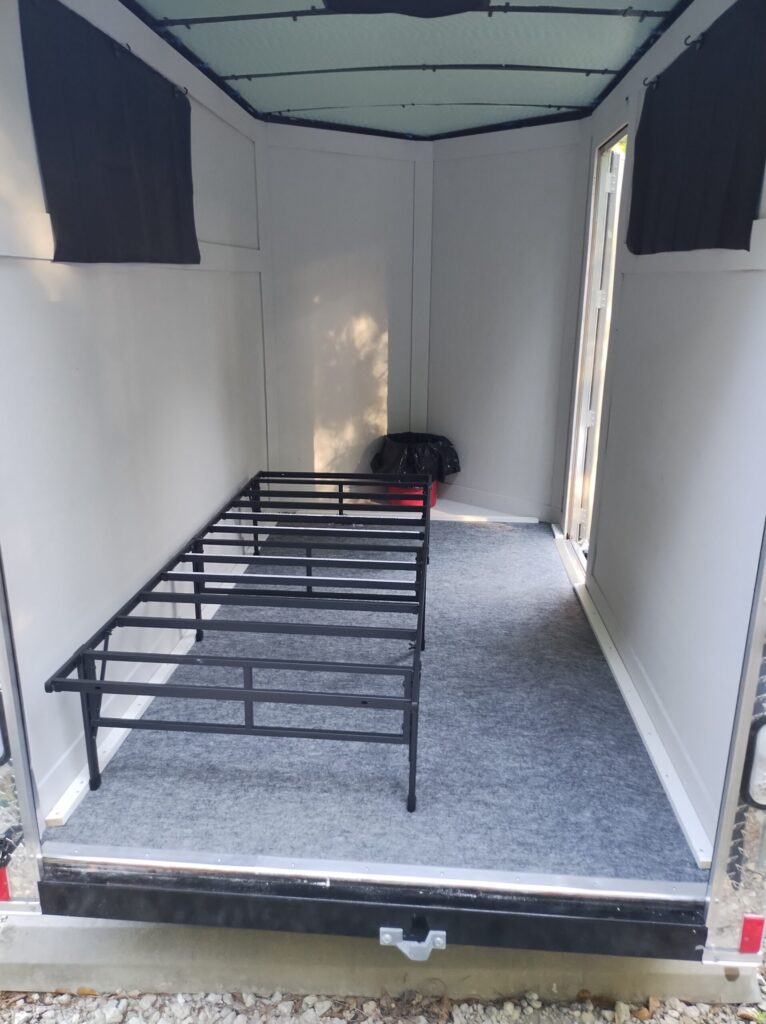
The bed frame I originally purchased seemed like a perfectly reasonable solution.
It is approximately 13 inches high and provides a simple platform for the mattress. When I bought it, I expected to use the area underneath the bed for storage.
There was just one problem.
My storage totes are approximately 15 inches tall.
They don’t fit.
Even if the bed were slightly higher, I discovered another problem. The supports underneath the manufactured bed frame divide the available space in a way that would severely limit how many totes I could store underneath it.
At best, the design would have allowed room for only about four totes.
In a house, losing a little storage space isn’t necessarily a big deal.
Inside a small cargo trailer camper, it matters a lot.
Every cubic foot has a job.
So instead of trying to force the original bed frame to work, I’ve decided to replace it with something much better suited to the trailer.
I’m going to build my own.
My New Bed Platform Plan
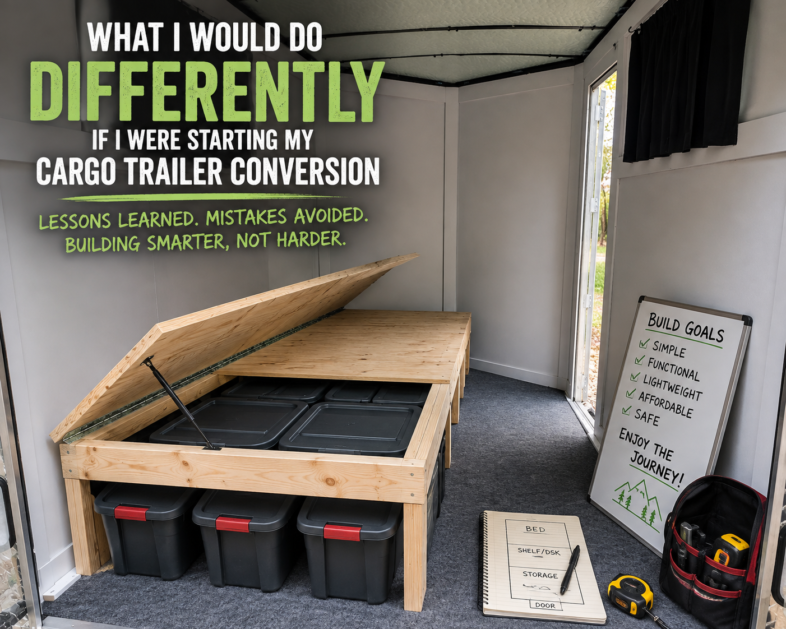
The new bed platform will be relatively simple.
I’ll build the frame primarily from 2×4 lumber and use 3/4-inch plywood cut to the proper size for the sleeping platform.
But there is one important difference between this design and simply building a taller wooden bed.
I want access to the storage underneath.
My plan is to use 12-inch piano hinges so sections of the plywood platform can be raised, giving me easy access to the totes stored below.
Instead of crawling around trying to pull totes out from the end of the bed, I’ll be able to lift the platform and reach them from above.
That should accomplish several things at once:
- Give me enough vertical clearance for my 15-inch totes.
- Eliminate unnecessary supports that interfere with storage.
- Allow me to use substantially more of the space underneath the bed.
- Make stored items easier to reach.
- Create a bed specifically designed around my trailer instead of adapting the trailer to a premade bed.
There’s an important lesson here that goes far beyond bed frames.
Don’t design one part of a small camper without considering everything that needs to work around it.
That is probably the biggest thing I would do differently if I were starting today.
I Would Measure the Storage First
Originally, I thought about the bed and the storage underneath it as two separate things.
Today, I would treat them as one system.
I would determine exactly which totes I planned to use, measure their height, width and length, decide how many I wanted underneath the bed, and then design the bed around those measurements.
In other words:
Storage first. Bed second.
That sounds backward until you remember how small a 5×8 cargo trailer really is.
When space is limited, furniture isn’t just furniture.
A bed can also be your largest storage cabinet.
A shelf can become a desk.
A counter can become a cooking area.
Open wall space can provide storage without consuming valuable floor space.
Everything has to earn the space it occupies.
If you’re planning your own cargo trailer conversion, don’t simply measure whether something will physically fit inside the trailer.
Measure what needs to fit around, underneath and beside it.
Those few extra measurements could save you from buying something twice.
I Would Buy Less Gear Upfront
This is another lesson I’m becoming increasingly convinced of.
You don’t need to buy everything before you start building.
It’s easy to watch cargo trailer conversions, van builds and RV videos and start creating a shopping list.
Before long, you’re buying organizers, cooking equipment, furniture, electrical equipment, storage containers, camping accessories and gadgets because you’re convinced you’ll eventually need them.
But until you’ve actually spent some time inside your trailer, you don’t really know.
I’m learning that there is a big difference between something that might be useful and something that deserves permanent space inside a small camper.
If I were beginning again, I would be even slower about buying equipment.
I would start with the essentials.
Then I would add things when an actual need appears.
That approach saves money, but I think the bigger advantage is that it prevents the trailer from becoming cluttered before the first trip even begins.
I Would Plan Before Permanently Installing Anything
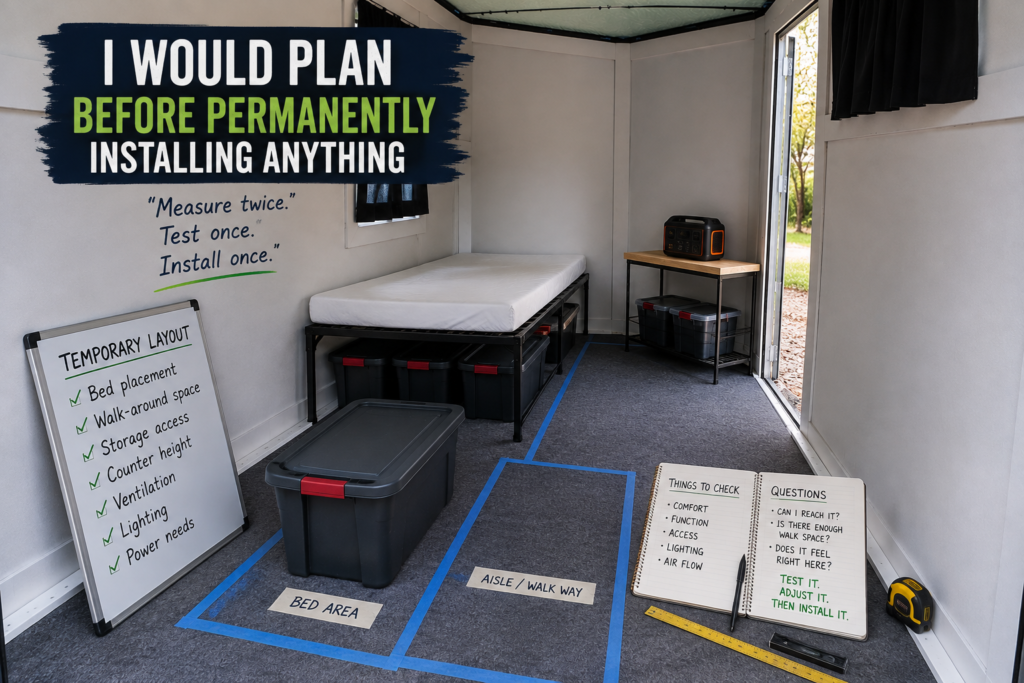
One thing I believe I’ve gotten right is resisting the temptation to permanently install everything immediately.
And if I were starting again, I would lean into that approach even more.
A cargo trailer can look enormous when it’s empty.
Start adding a bed, refrigerator, storage, cooking equipment, electrical equipment and personal belongings, and that open space disappears quickly.
That’s why I’m becoming a big believer in testing layouts before making them permanent.
Put the bed where you think you want it.
Sit on it.
Move around it.
Pretend you’re getting dressed.
Imagine reaching something stored underneath it.
Stand where you’ll prepare food.
Open the refrigerator.
Think about where your shoes will go.
Imagine getting out of bed in the middle of the night.
Those little exercises can expose problems that measurements alone won’t reveal.
Once you’ve drilled holes, built permanent cabinets or attached something to the walls, changing your mind becomes much harder.
There is no prize for permanently installing everything quickly.
I Would Keep the Build Even Simpler
I’ve said this before, but the farther I get into this project, the more convinced I become:
Simple is better.
It’s very easy for a cargo trailer conversion to become a construction project instead of a camping project.
You start with a bed.
Then you decide you need cabinets.
Then electrical outlets.
Then plumbing.
Then permanent countertops.
Then built-in storage.
Then elaborate electrical systems.
Eventually, you’ve spent thousands of dollars and months building something that may be heavier, more complicated and less flexible than what you actually needed.
That’s not what I want.
I’d rather have a simple camper that I can actually use.
For me, that means focusing on the basics: a comfortable place to sleep, useful storage, refrigeration, portable power, solar charging, ventilation and a practical place to prepare food or work.
Anything beyond that needs to justify its cost, weight and space.
I Would Think More About Access, Not Just Storage
The bed-frame situation taught me another lesson I hadn’t considered enough at first.
Having storage space isn’t the same thing as having usable storage space.
You can technically fit a surprising amount of stuff underneath a bed.
But what happens when you need something from the tote in the back?
If you have to remove three other containers, crawl underneath the bed and wrestle another tote out every time you need something, that storage system isn’t working very well.
That’s why I’m adding the hinged platform to my redesigned bed.
I want to be able to lift the sleeping platform and reach the storage underneath instead of treating everything beneath the bed like cargo packed into the back of a moving truck.
As I continue planning the trailer, I’m trying to ask a better question.
Not simply:
Where can I put this?
But:
How easily can I get to it when I need it?
That’s a much better way to design a small living space.
I Would Leave Myself Room to Change My Mind
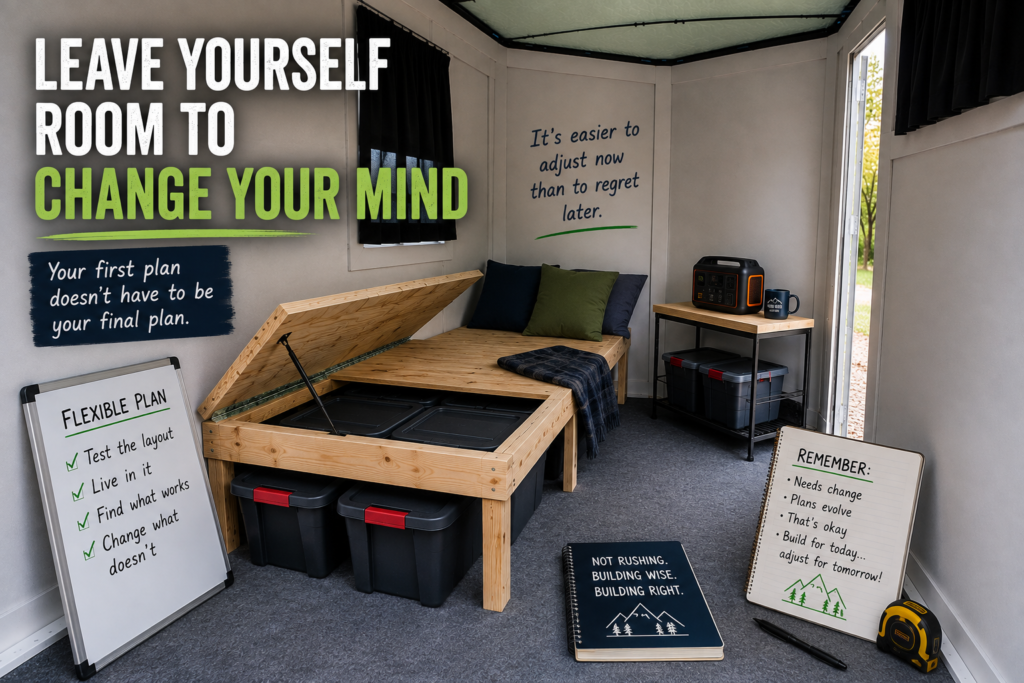
This may be one of the most important lessons for anyone building their first cargo trailer camper.
Your first idea doesn’t have to be your final idea.
The bed frame isn’t working the way I expected.
That’s okay.
I’ll change it.
I’d much rather discover that now than after I’m hundreds of miles from home.
And that’s one reason I’m glad I haven’t rushed this build.
Taking my time has allowed me to look at the trailer differently as the project develops.
Something that seemed like a good idea several months ago might not seem nearly as practical today.
That’s not failure.
That’s learning.
The goal isn’t to perfectly predict how you’ll use every inch of the trailer before you’ve ever traveled in it.
The goal is to create something flexible enough that you can improve it as you learn.
Build Around Your Life, Not Someone Else’s Trailer
One of the easiest mistakes beginners can make is copying another person’s conversion too closely.
I understand why.
You see a great cargo trailer conversion online and think, “That’s exactly what I need.”
Maybe it is.
But probably not exactly.
The person who built that trailer may travel differently than you.
They may cook differently.
They may carry different equipment.
They may be taller or shorter.
They may spend weeks boondocking while you plan to move frequently.
They may need a large electrical system while your power requirements are minimal.
Their perfect camper could be completely wrong for you.
I’ve learned that the better approach is to borrow ideas, not entire designs.
Look at what other people have done.
Learn from them.
Then ask whether those ideas solve a problem you actually have.
Don’t Be Afraid to Build Twice
Nobody likes spending money twice or rebuilding something they’ve already worked on.
I certainly would have preferred for my original bed frame to work perfectly.
But there’s also a danger in keeping something simply because you’ve already paid for it.
If something clearly doesn’t work before the trip begins, fix it.
My original bed frame isn’t going to magically become taller.
My totes aren’t going to become shorter.
And those supports underneath aren’t going to disappear.
I could buy different totes, reduce the amount of storage I carry or try to work around the frame.
But that would mean redesigning everything else around something that wasn’t right for the job in the first place.
Building the new bed platform solves the actual problem.
Sometimes changing direction is the cheaper decision in the long run.
What I Would Tell Someone Starting Today
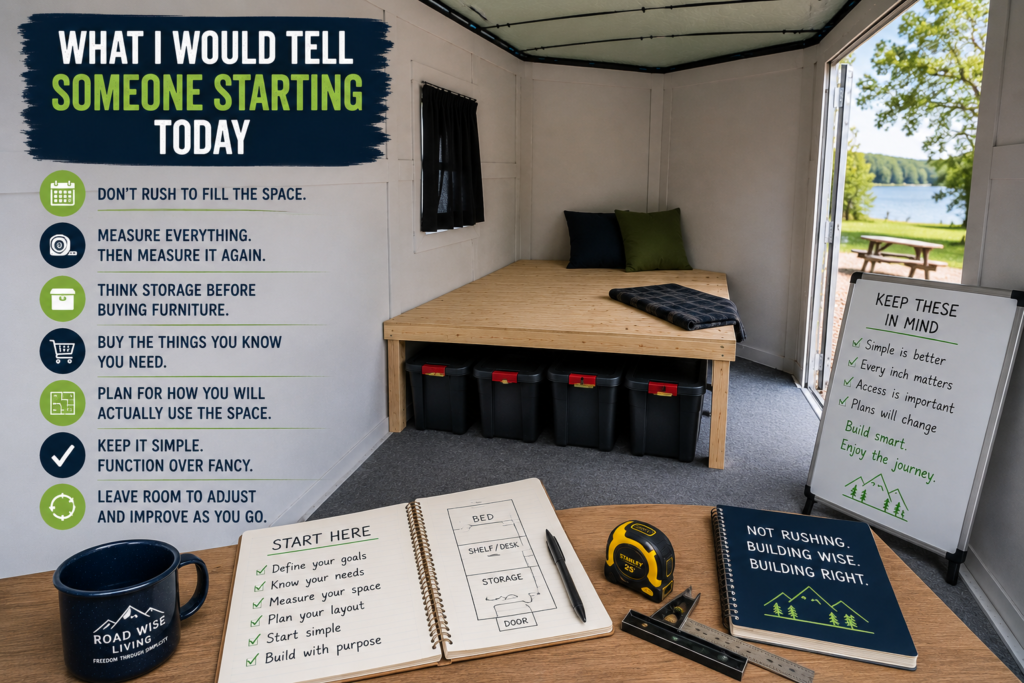
If you are standing inside an empty cargo trailer right now and wondering where to begin, here’s what my experience so far would tell you.
Don’t rush to fill the space.
Measure everything.
Then measure it again.
Think about storage before buying furniture.
Don’t permanently install something simply because you’ve seen other people do it.
Buy the things you know you need and wait on the things you’re unsure about.
Design around how you plan to travel.
And perhaps most importantly, give yourself permission to change the plan.
Your first design probably won’t be perfect.
Mine certainly wasn’t.
But that’s part of the process.
I’m Still Learning
My cargo trailer conversion isn’t finished, so I’m sure the bed frame won’t be the last thing I change.
In fact, I hope it isn’t.
Every problem I discover now gives me an opportunity to create a better camper before I get on the road.
That’s one reason I’m no longer looking at this project as something I need to finish as quickly as possible.
I’m trying to build thoughtfully.
I want a simple, functional camper where the things I carry have a purpose, the storage makes sense, and the systems are simple enough that I can maintain them myself.
If that means rebuilding something along the way, so be it.
I’d rather change a 13-inch bed frame today than spend the next several years wishing I had.
Build less. Think more. Keep it simple.
That’s probably the biggest lesson this cargo trailer has taught me so far.